

“I DON’T THINK THEY
DO VERY WELL AT
CAPTURING OUR VOICE”
Addressing youth gun violence, students and advocates say city officials have failed to meaningfully include young people in the policymaking process.
WRITTEN BY KIAN NAEEMI
PHOTOGRAPHY BY MERON MENGHISTAB
Yesterday, Seattle Mayor Katie Wilson’s administration released its proposed city budget for 2027. Under Wilson’s plan, the Seattle Police Department’s budget would increase by $68 million to $566.6 million, growing the department’s headcount by 66 people. The administration’s roadmap allocates $100 million to other public safety efforts; it marginally increases funding for the city’s Community Assisted Response and Engagement (CARE) Department, the unarmed public safety branch founded in 2023. Among other initiatives focused on youth safety and mental health, Wilson’s budget also devotes $600,000 for a new after-school program at Rainier Beach High School; two of the school’s students, Tyjon Stewart and Tra’veiah Houfmuse, were killed at a nearby bus stop after school in January.
Seattleites affected by gun violence have long demanded more community resources to address the issue, and often call for an especial focus on young people. Reported crime in Seattle has generally been on a downward trend, having decreased by 16 percent between 2018 and 2025, and the city saw zero homicides in June for the first time since 1970. But public attention returned to the ongoing issue of gun violence following a mass shooting at the Bite of Seattle festival in July, as well as several shootings across Belltown in September, which killed three more people. In total, six people died, including two teenagers, and Seattle Police arrested a fifteen-year-old at the Bite of Seattle shooting.
Wilson’s proposed budget funds the gun violence reduction plan her office published last week, which tasks the CARE Department with leading the city’s efforts, coordinates public-safety practices across city departments and community organizations, and expands youth-focused programming and mental-health services. Wilson’s plan claims to tackle the root of gun violence, framing the issue as a public health crisis, and placing youth at its center — expanding the role community members play in stemming the violence. To that end, the gun violence reduction plan also sets up community groups called “violence reduction councils,” which work with officials, social-service providers, and others to “review every homicide, identify gaps, and recommend changes that will help prevent future violence.”
While the mayor’s budget, and her gun violence reduction plan, will likely go through major revisions following negotiations with City Council — including, potentially, SPD’s sizable budget increase — policymakers are overlooking a costly, chronic public-safety issue.
Interviews conducted by CHUM News with young people involved in violence-reduction programs suggest the city’s efforts to curb gun violence haven’t addressed a persistent problem: Policymakers and officials rarely consult youth, and fail to meaningfully include young people in the creation and enactment of relevant programs.
City officials and associated groups have an opportunity to expand the ways young people are treated as knowledgeable partners, rather than just subjects, beneficiaries, or volunteers. The structures are largely in place for more substantive, continuous engagement with young people as new practices are drafted and put into practice. But, especially if youth disempowerment persists, the new plan risks falling short of its stated goals, and young people will bear the cost of that inadequacy.
That’s not to say young people are entirely left out of government-led public safety matters. When reached out by CHUM News, Jonah Spangenthal-Lee, who recently served as a spokesperson for the Mayor’s office, cited one existing program that engages youth on this topic: The Human Services Department operates a grant program that is central to the mayor’s safety agenda, and it includes youth input in the points system determining grant approvals. But serving as a youth voice in this capacity involves a fairly high barrier to entry; the young people in this role are all involved in programs managed by the Human Services Department, or by the Department of Neighborhoods. Mayor Wilson’s gun violence plan does not explicitly include new methods to consult youth.
“You have to know people and you have to be a part of things to hear about all of these opportunities where you can give back to your community,” said Ishani Gupta, a member of the NAACP’s youth council. “There's no sort of … ‘marketing.’”
Youth are oftentimes given a place where they can speak about issues they have, whether at town hall-style meetings specifically about public safety, or during public comment for some government body. But that doesn’t mean their voices are listened to.
“I don't think they do very well at capturing our voice: I think they'll capture our voice and then amend what they want to amend to their liking, instead of taking the raw data from us," said Catalina Nwaorgu, a member of the NAACP youth council. “[It’s] why tokenization is a big [issue] when it comes to [youth in safety discussions].”
Advocacy can be less accessible not just on the basis of who you know, but who you are.
“Seattle is a place full of diversity, which is wonderful,” said Rilan Springer, who served as a safety advocate during his time at Garfield High School. “But, especially in situations where there’s mostly white people in positions of power, it’s easy to take anyone who doesn’t fluently speak the very formal and corporate English, and assume that they’re not educated, or assume that [their] community doesn’t know what they want.”
Advocates would like to see more effort from local government to seek youth input. “We reach out to a lot of people,” said Gupta. “I think it would be great to see some sort of initiative from others.”
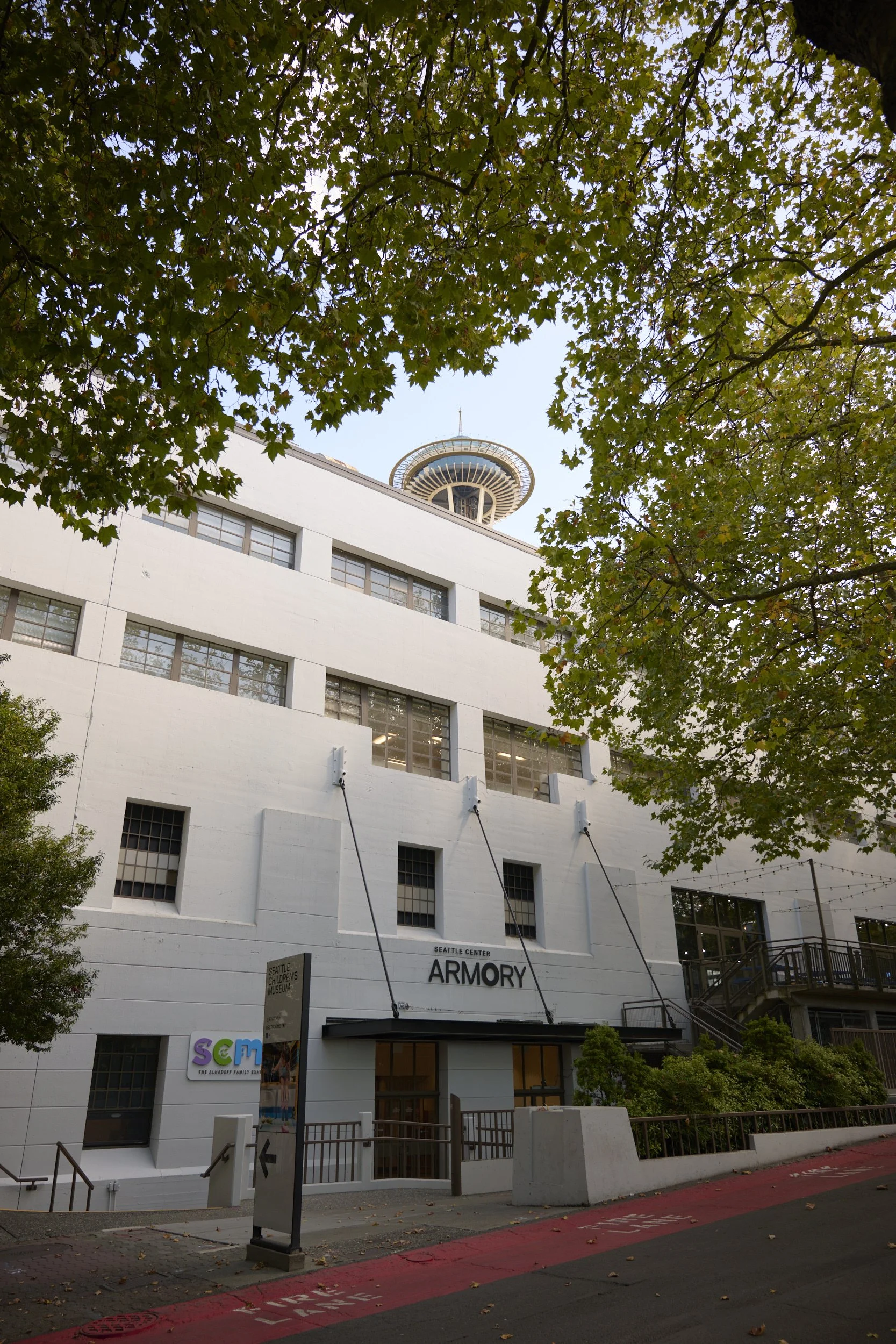
The Seattle Armory. In July, three people were killed in a shooting and four injured during the annual Bite of Seattle Festival.
Seattle uses a mix of city programs and community organizations in its efforts to reduce youth gun violence, with King County helping through its Regional Peacekeepers Collective, part of the county’s Regional Office of Gun Violence Prevention. At multiple schools, organizations like Community Passageways have violence interrupters building relationships with students inside the building, in addition to people standing outside schools when class ends or during open lunch, acting as trusted adults for students, while also operating many programs focused on getting youth out of the school-to-prison pipeline. SPD patrols neighborhoods and responds to shootings in the moment, but its presence at schools is from inside their patrol cars, often just in the weeks/months after a shooting has already occurred. Seattle Schools have ruled out cops inside their schools.
The city also uses students to bridge the gap between adults and students through its Youth Safety Ambassadors program. Participants in the YSA program make themselves known to peers, and build relationships with them. “Us being around the schools, being able to hear from other students, actually having connections with the students, we’ll be able to figure out what’s going on,” said Sinta Cordova, a new member of the YSA program at Garfield High School.
The City of Seattle relies on the YSA program for the effectiveness of its other community services. It uses students to connect peers who need services to adults.
Community organizations providing permanent eyes on the street aim to fill some of the gaps that a haphazard police patrol car presence fundamentally cannot. They often form relationships with students in a way where they can tell when they need to intervene to prevent students from starting fights: Petty fights, while often unremarkable, devolved into shootings at least twice at Garfield High School in 2024. Safety programs that stay around for a long time can produce results. Garfield did not see an end to its spate of violence because of the sporadic police presence after shootings, but rather because of the consistent, long-term effort of Community Passageways. On top of that, a large part of their members’ job is to be at the school just to listen to students, being someone that students can come to whenever they have concerns. Listening to youth helps make them effective.
Meanwhile, when Community Passageways’ funding wasn’t renewed at Rainier Beach High School, community outrage followed. A parent called the potential removal of Community Passageways there “another death for the kids.” The Wilson administration did eventually hear that group’s concerns, and recently reauthorized continued funding for Community Passageways at Rainier Beach.
But, if given a platform, youth advocates have thoughts on what should be done to reduce the gun violence plaguing their schools and streets.
“It starts in schools because you see our gun violence being from 15 year old kids, 16 year old kids,” said Nwaorgu. “Starting from their education and how do they get access to those [ideas], like what are they being exposed to?”
“I think a big thing is preventative action,” said Gupta. “So we want to see more work to prevent guns from getting in the hands of kids and others… getting kids more aware of the issue of guns and the issue of gun violence, and [teaching] how to personally advocate for those around them without feeling a lot of pressure or scared that if they snitched someone might come after them.”
Some students also think their schools aren’t equipped with the right hardware. “[The Youth NAACP Council] talked about getting metal detectors but also making sure students don't feel as though they're going through TSA security, as a general safety measure for all schools,” Gupta added.
Violence isn’t something that students learn much about as they are prepared for their future, even though it’s a huge part of the world they’re stepping into today.
“There’s no education on conflict management. There’s a few individual teachers [at Garfield] who I would say absolutely will teach you how to walk through that, but that one teacher can only reach so many students, right? And that can’t be the case,” said Rilan Springer. “We need to constantly be teaching children how to approach these problems because they’re dealing with bigger problems than I think most adults have seen before.”
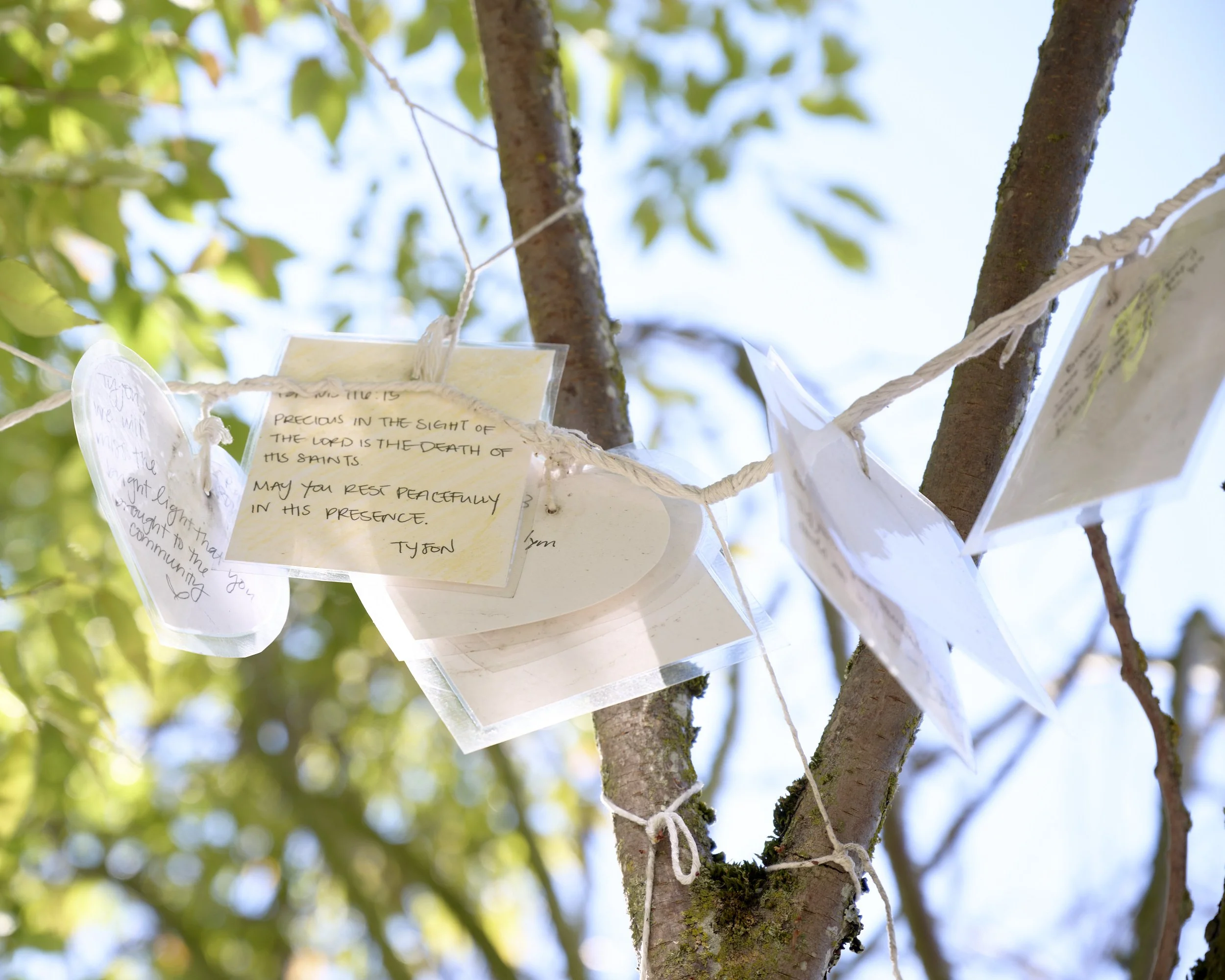
Notes left at a memorial next to a Rainier Beach bus stop, where two students were killed in January.
Facing these big problems around public safety, but lacking the means to shape how the city designs, funds, and actualizes policies addressing their big problems, youth may soon witness the Wilson administration’s public safety strategy going the way of prior tried and somewhat lackluster initiatives. If disconnected from the people it seeks to serve, Seattle may inadvertently fund programs that are disjointed from on-the-ground realities, resulting in practices that waste funds on misguided programs, or that encounter skeptical and noncooperative students.
As this advocate administration works on a safety policy, one which focuses heavily on youth violence, youth advocates feel they’ve been left behind. Some groups have greater difficulty getting their voices heard, they emphasized.
But the structural container is largely in place as the Wilson administration begins to swell the ranks of its new programs, including its violence reduction councils. If young people can access and participate in those councils, as well as grant disbursement processes, policymaking discussions, and other civic responsibilities, public safety programs might have the substantial buy-in of more constituents, including through youth advocates who work closely with their peers.
Kian Naeemi is a recent graduate of Garfield High School, where he served as a writer and social media editor for The Garfield Messenger. Kian is an advocate for immigrant rights, and plans to pursue a career in civil engineering.
Meron Menghistab is a South Seattle-based and -raised photographer working primarily in narrative structured work. He is the Art Director of CHUM News.