

CHUM TOURS FUTURE HOUSING FOR ARTISTS
A BELLTOWN ARTISTS’ COLLECTIVE JUST BOUGHT A BUILDING FOR 20 DOLLARS. WHAT COMES NEXT?
BY ADAM WILLEMS | DEC 8, 2025
It’s early December and, at last, I’m inside the El Rey, a century-old brick building in Belltown now in the possession of Common Area Maintenance (CAM), the local artists’ and writers’ collective. I’ve been covering the El Rey since last spring, when its then-owner, SOUND Behavioral Health, a regional nonprofit, appeared on the verge of knocking it down. What would replace this 115-year-old building was undetermined, but was likely to be uninspiring — a parking lot, some staid luxury housing, or something outright ghastly like another NFT Museum.
Things are no longer as do-or-die for the El Rey as they were in May; if anything, the El Rey might soon be doing well. Following months-long negotiations with building ownership and the Seattle Office of Housing, CAM secured ownership of the El Rey last month for a grand total of… 20 bucks.
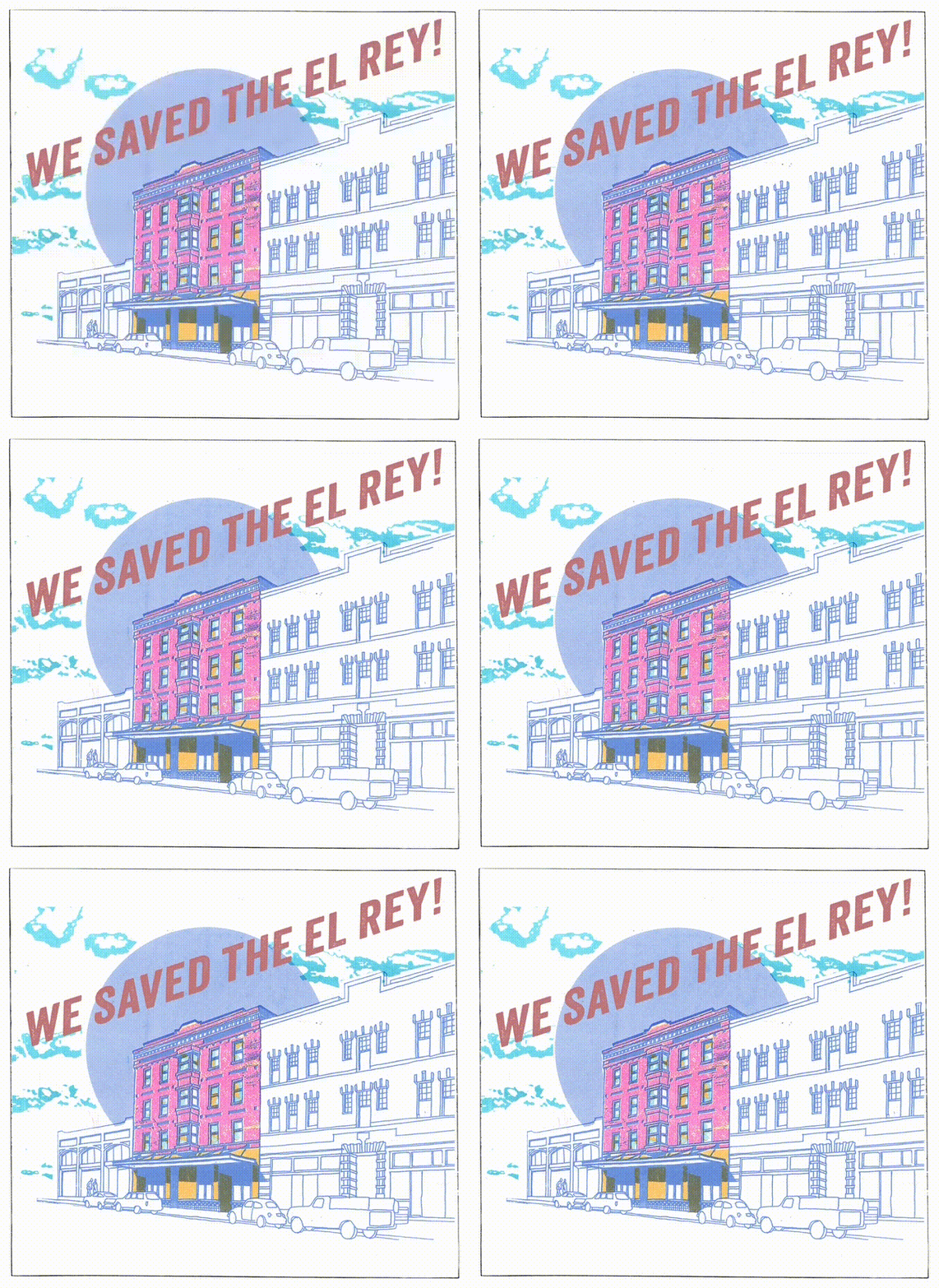
It’ll cost CAM a bit more than $20 to rehabilitate the El Rey — estimates hover around $4 million. That’s a lot, but is below the average cost of a wholesale, multi-purpose overhaul of this scale. CAM’s vision for the property includes approximately 10 one- and two-bedroom low-cost apartments for local cultural workers, as well as 18 hotel-like rooms for cheap, short-term use by nonprofits. (Helpful for local theater groups who need to house cast & crew, and good for visiting artists, lecturers, performers, etc.) In CAM’s designs, the building’s ground floor will also include a gallery, performance venues, and two street-facing retail spaces.
THE EL REY: TIMOTHY FIRTH, 2025
Could you, too, purchase a 30,000 square-foot property in Seattle for 20 bucks? CHUM News bravely says that’s highly unlikely. How CAM came to own the El Rey is a perfect-storm-like story featuring some less-than-rosy chapters. The building’s history helps contextualize the building’s affordable sticker price, and explains the cost of its restoration.
In August 2020, citing “deferred maintenance,” SOUND shuttered the El Rey, which, until that point, had been a residential facility for 60 people, representing 13% of King County’s contracted mental-health treatment beds. (The El Rey was designated as affordable housing by the Office of Housing, which extends a highly favorable loan to the property’s operator on the condition that it agrees to its stipulations.) SOUND had acquired the site when it merged with Community Psychiatric Clinic (CPC) in 2019. The building had a sewage leak and plumbing problems; bringing the El Rey “up to where it needed to be” would have cost millions of dollars, SOUND said. After it was closed, however, at least one former resident wound up unhoused; and the El Rey was soon burgled and stripped of many of its copper wires and pipes, forcing SOUND to put the building under a round-the-clock fire watch, which allegedly involved paying a security company $50,000 per month.
In a double bind — either paying six figures per year to keep the El Rey in its derelict state, or seven-plus figures to bring it up to code — SOUND saw demolishing the building, and then most likely selling the plot, as a way out. (How that decision would have penciled out is uncertain, especially as the site isn’t large enough to support a high-rise development, which would have turned off some developers.) Delicate diplomatic work convinced SOUND that a transfer could mitigate financial risk while maximizing civic benefit; and CAM further convinced the Office of Housing that it could steward the El Rey responsibly, meaning it may see the building’s loan forgiven altogether once CAM meaningfully moves ahead with the property’s rehabilitation.
As a staunchly pro-housing mayor takes office, might Seattle see more projects like CAM’s revamp of the El Rey?
Kickstarting that rehabilitation requires $250,000, according to Timothy Firth, CAM’s co-founder and director. We caught up last week over a tasty breakfast at Ludi’s (pancakes and eggs over easy for Timothy; lumpia and garlic rice for me), followed thereafter with a long tour of the El Rey’s interior.
Timothy seemed apologetic that the vandalized building his nonprofit acquired a week ago wasn’t in Airbnb superhost-like shape. Sure, wires strung out of walls, and pipes had been sawed off; boot marks showed where construction crews and copper-prospecting burglars had trodden; drywall and ceiling tiles weren’t in mint condition.
The El Rey isn’t exactly oozing hygge at the moment, but its promising potential is plain to see. It’s a storied building close to transit, landmarks, and nightlife, and could serve as an anchor for new cultural programming in a neighborhood accustomed to tourism, dive bars, and “Pike’s Place” rubbernecking. More broadly, in addition to an urgent need for affordable housing, including for cultural workers, Seattle needs spaces where artists and others can congregate consistently and cheaply. What if artists, writers, dancers, poets, and others could all share a building? And what if guests attending programming within the building’s various spaces could encounter each other haphazardly in its common areas?
That kind of collegial atmosphere is how you get people to meet one another and start doing things together, especially in a city so siloized and lacking in truly public spaces. I think of the commons that is the New York City subway, for example, which is frequented by everyone, regardless of tax bracket or background; an underappreciated forum for community-building through serendipity.
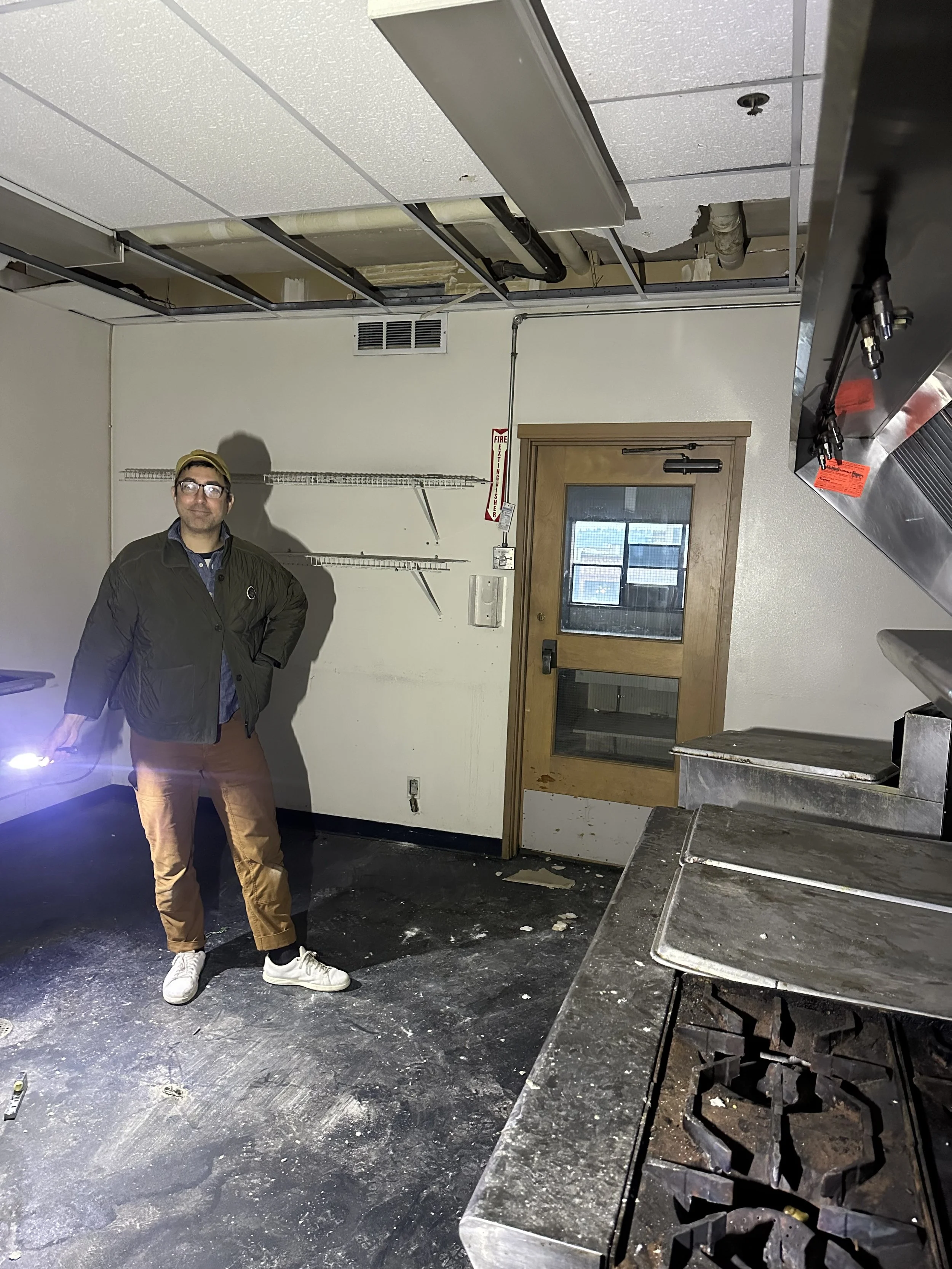
TIMOTHY FIRTH IN THE EL REY’S KITCHEN
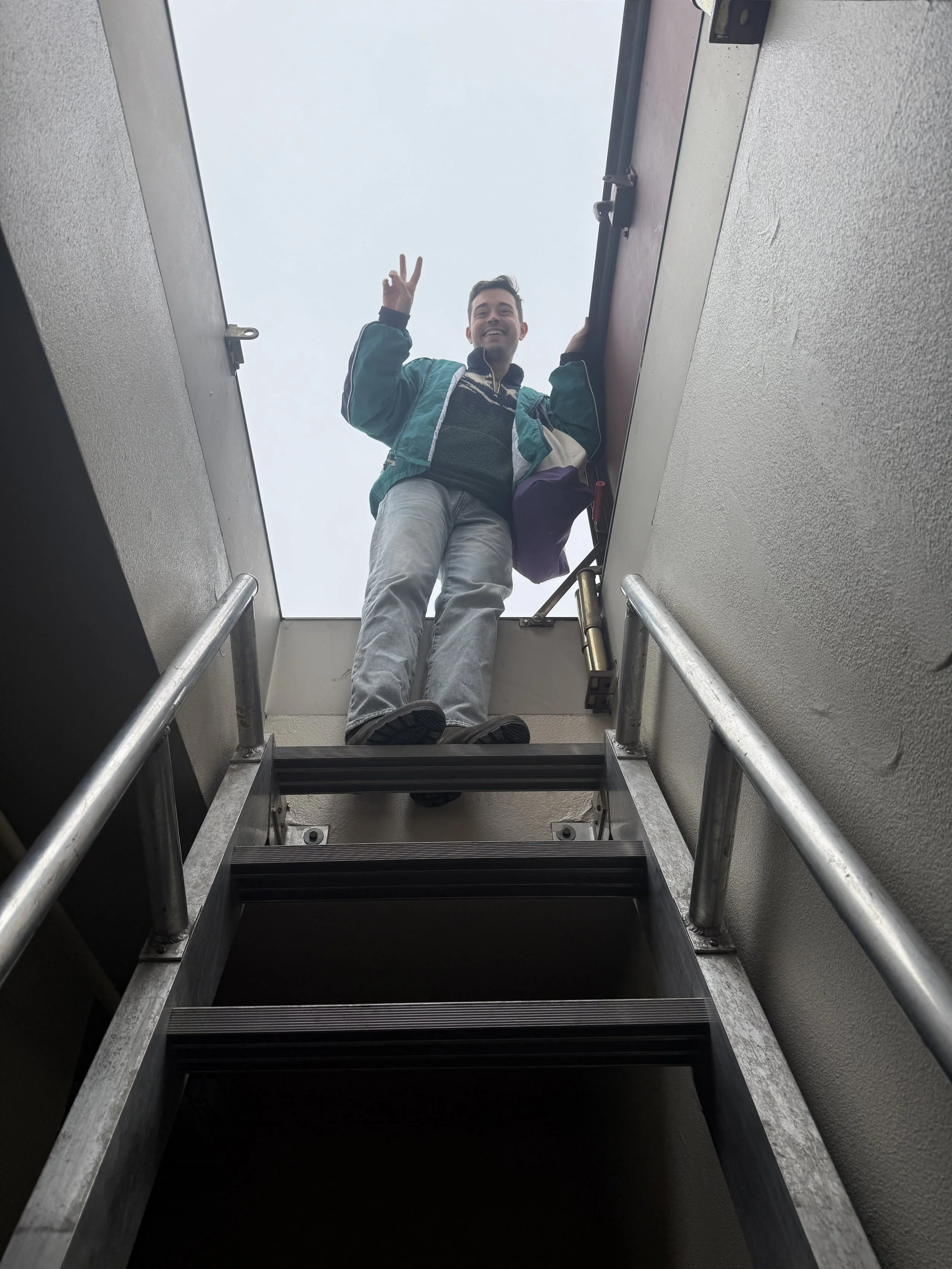
CHUM’S ADAM WILLEMS SAYS “CHEESE!”
It will take more than serendipity to fund the El Rey’s glow-up, however. The $250,000 mentioned above will go toward providing temporary power to the building, including its fire detection system, which would most likely lead to the El Rey being taken off its mandated fire watch. From there, CAM estimates upward of $4 million in additional funding needs. (Minus eight dollars: I noticed the burglars didn’t steal the water boiler’s manual.) CAM aims to tackle system repairs first, and then improve the ground-floor retail spaces for commercial leases (income, baby), and then complete the housing and residential projects on floors 2, 3, and 4. A costly uphill battle.
Could you, too, purchase a 30,000 square-foot property in Seattle for 20 bucks? CHUM News bravely says that’s highly unlikely.
So where does that money come from? “Our big-picture plan is to find foundations who support arts and housing, and work with the handful of individuals who have already been supporting us, and also find new individuals who support similar community-driven orgs and projects and are in alignment with our values,” said Amy Hirayama, CAM’s programs director. “We're exploring every avenue that comes up.”
Among other strategies, that includes reaching out to big local names — businesses, billionaires, sports stars — who’ve been prone to write checks to Seattle orgs. The project also has the support of Seattle city government, which will likely buoy deep-pocketed benefactors’ confidence. And Firth & co are forsaking their short-term wellbeing to secure this longer-term goal. Walk down the west side of 2nd Ave between Lenora and Blanchard and you’re likely to catch a CAM member working next door to the El Rey as part of their “Firewatch Residency,” with others just a quick jaunt away to keep an eye on things.
Is the El Rey’s new life in 2025 a “win”? For the most part, absolutely. When it managed the El Rey, SOUND housed 60 people in single rooms, and sometimes bunked more than one person to a room; CAM will keep some of these single rooms for short-term visitors, and will convert the top two floors into full-fledged apartments with their own kitchens and bathrooms. Much of the El Rey will remain affordable housing, and CAM may help address other local needs through the building’s multipurpose renovation.
But it’s worth remembering some of the systemic failures — way beyond the control of CAM, an artists’ collective — that led the El Rey, and its former residents, to this current juncture: the inadequacy of underfunded mental healthcare contracted out by local governments to the nonprofit-industrial complex; longstanding resistance by outgoing politicians to fully funding affordable housing and social housing (though that’s improving); and a framing of mental health crisis and housing instability as individual failures often worthy of punishment.
The good and the bad can be true at the same time. And, whether it wants to be a poster child or not, CAM’s stewardship of the El Rey will have ripple effects. As a staunchly pro-housing mayor takes office, might we see Seattle replicate initiatives like CAM’s El Rey acquisition in other pockets of the city? Local politicians and philanthropic groups will certainly be keeping tabs, extrapolating from CAM’s successes and failures to fund or defund similar projects. CHUM News will be keeping tabs, too.
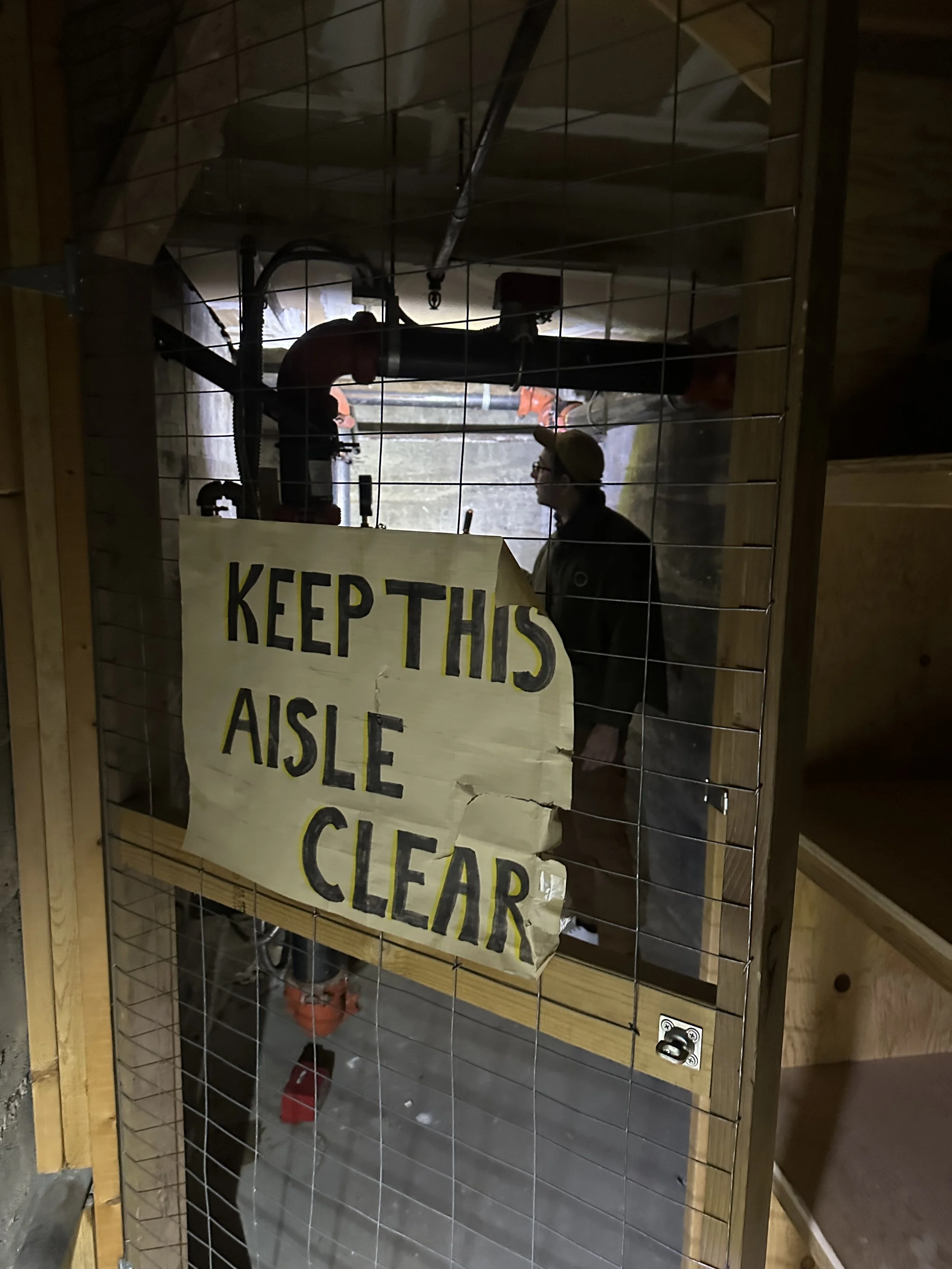
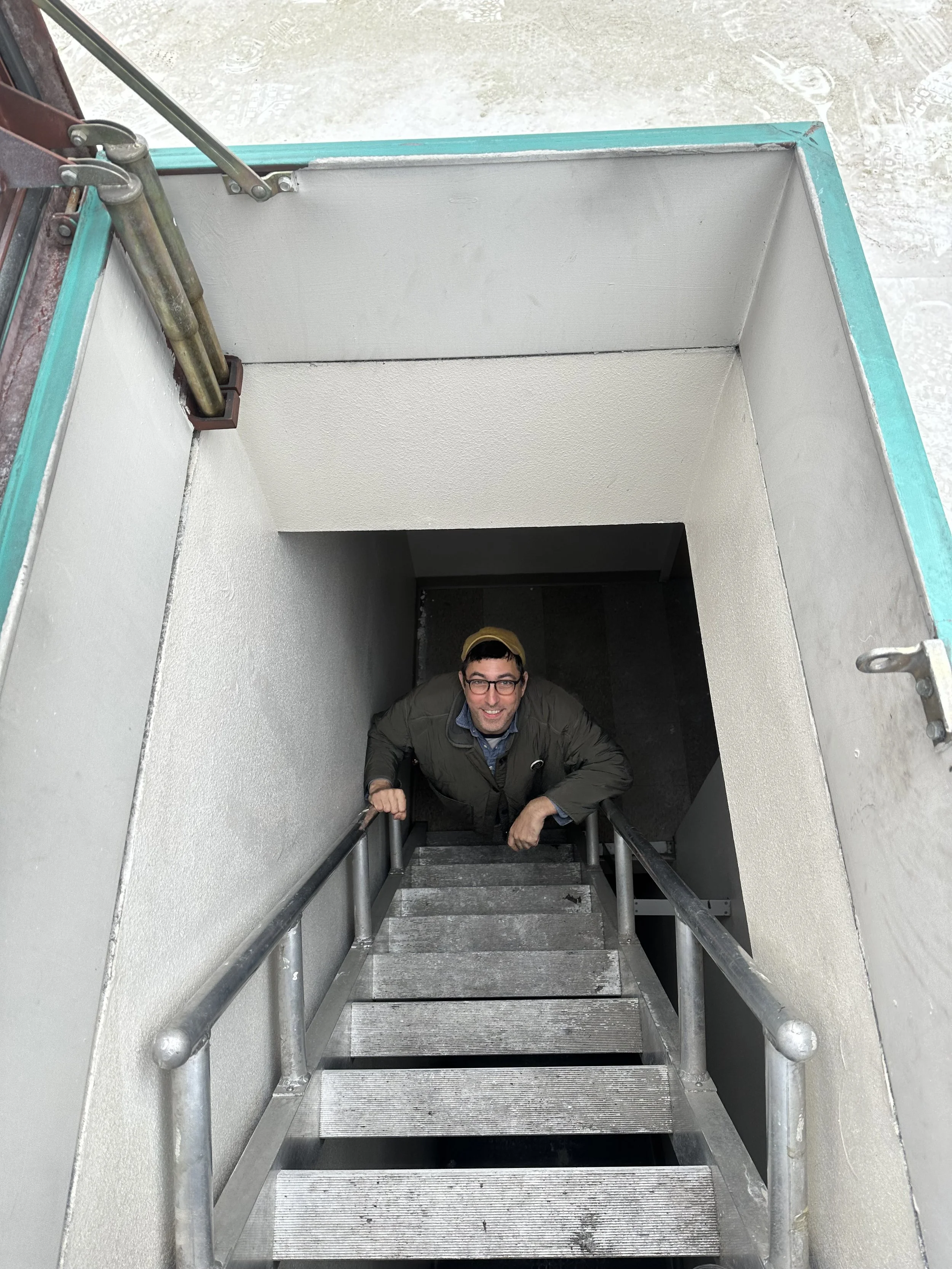
TIMOTHY FIRTH TOURS THE EL REY’S BASEMENT
Learn more about the El Rey’s future on CAM’s website.