

THIS WAS HOME: A EULOGY
WRITTEN BY REAGAN JACKSON
ILLUSTRATIONS BY NAHOM GHIRMAY
In the 1970s, more than 73 percent of the Central District’s residents were Black. In 2026, it's 11.3 percent. There are now more murals of Black people than actual Black people in the CD.
This Was Home: A Eulogy
In the quietest part of the night, long after closing time, but hours before the first rays of daybreak, a soft black mist filled Midtown plaza. Any onlooker might have confused it with a shadow, but no one was awake to watch, and this was nothing as ordinary as a shadow. She was as Black and nameless as the moonless night, an inky breath that hummed with life and slid into Midtown like silk, expanding as she moved, her tendrilled darkness gently kissing painted cheeks and hands. Such pretty pictures: an ebony man tipping a top hat, frozen in a bow, decked out in a pinstriped suit. A little brown girl in a cotton candy pink dress and black patent leather shoes, painted in mid jump, her braids capped with beads that matched the double dutch ropes. A choir of women of various hues, their church lady hats like angular birds frozen beneath the fluorescent streetlights.
Who they were and how they arrived didn’t matter anymore. The red lines that had bound them through maps, the system that accidentally forged something more than the sum of its parts — a community, beloved — fell victim to the backward extrusion. Erased and redrawn, displaced and dismantled. A community — discarded, disregarded, their images on the sides of the buildings they once inhabited were something less than ghosts, but something more than paint. Do grave markers ever matter to the dead? Or are they simply a way for the living to remember where the bones are buried? No one would paint an angry ghost, so they were immortalized with the lie of their smiles. Black joy oozing down the crevice of every wall. As the mist filled the square, inch by inch snaking its way down the alley and around the corner, a strange and soundless miracle began to occur.
The murals that lined the brick began to shimmer and shift. A brown hand unfurled. Then a foot, a leg, an arm, a torso, a crown of pin curls, a halo of afro, a shoulder, a mouth, a fist. Then eyes and noses, whole paper-thin faces and paper doll bodies peeled themselves off all the surrounding walls. Slender sheaths shimmied and plumped up into round corporeal bodies. No bones, no flesh. They were like kites made buoyant and held aloft with the swirling eddies of whispered stories. Stories of life. Collective memories inflated their bodies with a silent jazz as their steps soundlessly promenaded down through the square. They followed the mist in a parade of melanin and style as she exited Midtown, animating the murals from 23rd and Union before leading the procession down towards Garfield and then spilling out into Jimi Hendrix Park in the shadow of the Northwest African American Museum.
Jimi himself presided, leaping out of the wall that served as a canvas. His purple suit and white ruffled blouse unwrinkled as his platformed boots hit the grass. He convened the gathering with a few bars of the Star-Spangled Banner strummed across a pristine guitar. What could be more fitting than the red, white, and blues done Black as the mist gathered itself with a flourish into a body, solid and black with no face. No teeth with which to grin, no heart or ears to listen. But as the being breathed, words formed and resonated through the field and beyond. Just two words.
Remember me.
Here in the broken silence, they could all be heard.
Remember us, the murals chorused back.
There, on the museum lawn, the mural spirits became docents to one another through the galleries of the lives lived there, the voices and stories that had seeped into the ground and culminated as scrapes of paint flattened into walls. Speaking, screaming, whispering the eulogies of those who had lived there, how they had dreamed and fought and fucked and burned and loved and prayed and ate and lived and died in this place they called home.
This was home. This was home. This was our home.
It’s been said that everyone dies two deaths, the physical death and the death that occurs when the last person alive to speak your name dies. The first death for the Central District was one of a thousand papercuts. She was born from a thin line of red ink in a room somewhere with a hive white men and maps busy envisioning a city where the undesirables were confined to a designated space, lest they wake up in a home next to a neighbor that was “one of them” and not the preferable “one of us.” Not every cage is made of bars, this one was made of covenants and policies, but what was born within was something that endured, that flourished, something Black and while not entirely free, a closer approximation than many had experienced.
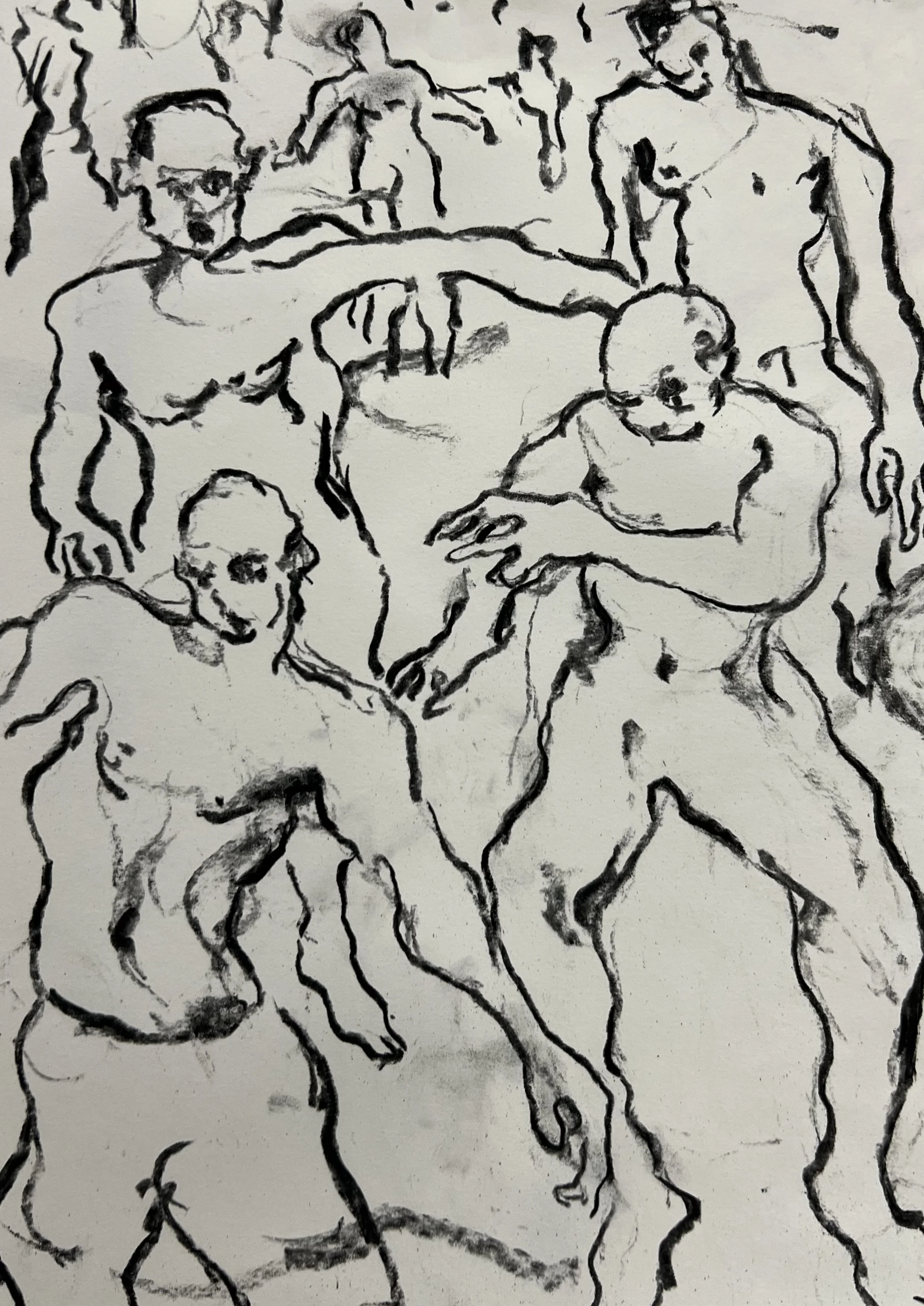
The CD emerged in the laughter of the children born there, brown-skinned and full of joy and rage, sorrow and mischief, strife, and friendship. Their lives, tattooed like chalk on summer sidewalks, were vibrant and impermanent, smudged and drawn anew from rain to rain. Trees lined the streets, and the city was just as beautiful in this corner as in the ones where white people cloistered themselves. Born from the convergence of bigotry and necessity, a community coalesced.
The first death arrived in a letter, junk mail offering a “fair price” for a Black home. Like the first ant at a picnic. The first fleck of gold in the dust bowl of a Native reservation. A white whisper of something valuable held in Black hands. As the whisper spread, the milk curdled and the honey turned rancid. The grillsmoke of summer barbecues dissipated with the coming of a new season, a white mist like amnesia. How many families had the same question. How could they be redlined in just to be pushed out? And then they were gone and no one was left to wonder. Only a mist, whose magic disappeared at the break of the next day. But the echoes still shimmer in the twinkle of an eye, the whisper of a song, if only someone would listen. If only someone could have seen the beauty in it sooner and thought to save it. The walls remember, flat bright reminders of the space between deaths.
Reagan Jackson is a Seattle-based writer, facilitator, and book doula. She is the award-winning author of Still True: The Evolution of an Unexpected Journalist (Hinton Publishing 2024), three full-length collections of poetry, two children's books, and a prolific amount of essays, short stories, and articles. She is currently at work on her debut YA novel.
Nahom Ghirmay is a Seattle-based Eritrean artist. Ghirmay believes that art has the power to connect people across cultures and backgrounds. Through his work, he hopes to foster empathy and understanding between individuals, and to create a space for meaningful dialogue.