

THE WORK IN
CONVERSATION
BARRY JOHNSON, A PAINTER AND MURALIST, SHARES WORK
IN RESPONSE TO DUJIE TAHAT’S POEM, “ON DEVOTION”
ON DEVOTION
White folks do land acknowledgements
in historically Black neighborhoods.
The International District always has been
Asian, but, perhaps because Hispanics
(insofar as these are coherent categories)
moved in next door, it changed. So now
both live where once was a Hooverville
tent city mayored by a weird woman
with a broom. In my neighborhood, I’m new
to the turn of the till on this patch of earth,
the morning plenary of baubles in
the bamboo, the bamboo, the blue jays’
flight path, omen or portent. There are, here,
smaller and fewer trees, so a different
constellation of birds, small gods for which
I do not yet know how to pray, what
bone to pick or burn, flit. I have never
had a yard in the city. If the line is a plow
pulled one end to another, readying dirt
for seed, my sentences are the patch.
The syntax of my garden make no sense
some seasons, as in what floats above
shape them more than I would like to
admit. Of course, there is what we say
and then there is devotion, balance of
faith and action, for which there is a version
that makes us believe in the certainty of
solitude, so hideously mortal, but, listen—
reader, beloved, even here—there is no
de-peopled substitute—even in our glass
sphere city, cannot self-serve at a corner
store or deliver by drone. Devotion is
the till, the tool, the towel that stinks
even after the wash. The air that breathes
you knows all manner of lungs and furnaces
and shivers in the leaves. The trees.
The trees. The trees. Equanimity weathers,
feels so much like bravery in its interest
in truth or what it is as opposed to what
I want it to be. Pain is not disorientation.
Disorientation attends pain when we
are not ready to be with hurt, to believe
we can withstand what comes next.
We must expand what we know can grieve.
Scroll. Skip. Tap. Urban planners have
historically planted, I learned on Tik Tok,
male trees because less mess and because
private property is inherently theft and
because patriarchy and and and… allergies.
A history of displacement is basically
invasion, but later, I read trees are, in fact,
very queer. Most tree species possessing both
male and female flowers, either that or
every flower has both pollen and ovaries.
I watched a play today, and I don’t know if
I want to fuck the main character or be her.
Today, a play watched me torn. It is a gift
to be the object, to be in touch, to be
with another asking, to be owed, owing. What
devotion to desire. At all times, I am
learning we are all prompted, being
inducted into the grammar of animacy.
When I say we, I mean the poppies, too.
The mimosa tree before and after it blooms.
The two-hundred-year-old cedar, the biggest
in the city, cedaring in our front yard.
The coyotes frequent less on the high-hill.
The hummingbirds sweetwater. The rabbits.
The rabbits. The babbits. All verbs. My grief
is a relational dialect. When I divorce
my pain, the arrangement flattens, falls apart.
Everywhere is home. My preferred
language is listening, so I assume thanks
and please, which can easily be mistaken for
impoliteness, a kind of savagery projected
onto me by a social positionality stunned
by the fear of knowledge. How it came to be
the only major American city named
after an Indigenous person whose defining
characteristic was friendliness to settlers
is now the seat of a county named after
a civil rights leader who warned against
the recruitment of his memory in the service
of empire is a kind of devotion, too. People
have rabbit nature, I’m telling you.
My lover told me this. It is bi-directional
in every orientation, and the history of making
it make sense is a kind of conquest, hammers
straight, the bright line of progress. It is so
inevitable to lose people without attending to
what we’ve done to lose them. Imagine
what we’ve done with the earth, the place
arounds and homes us. Nasturtiums sprout
overnight when no one looks. Community is
a word that works even when no one
knows it. The only pronoun confusion
that matters is that which determines
who is alive to decide how we (or they) live.
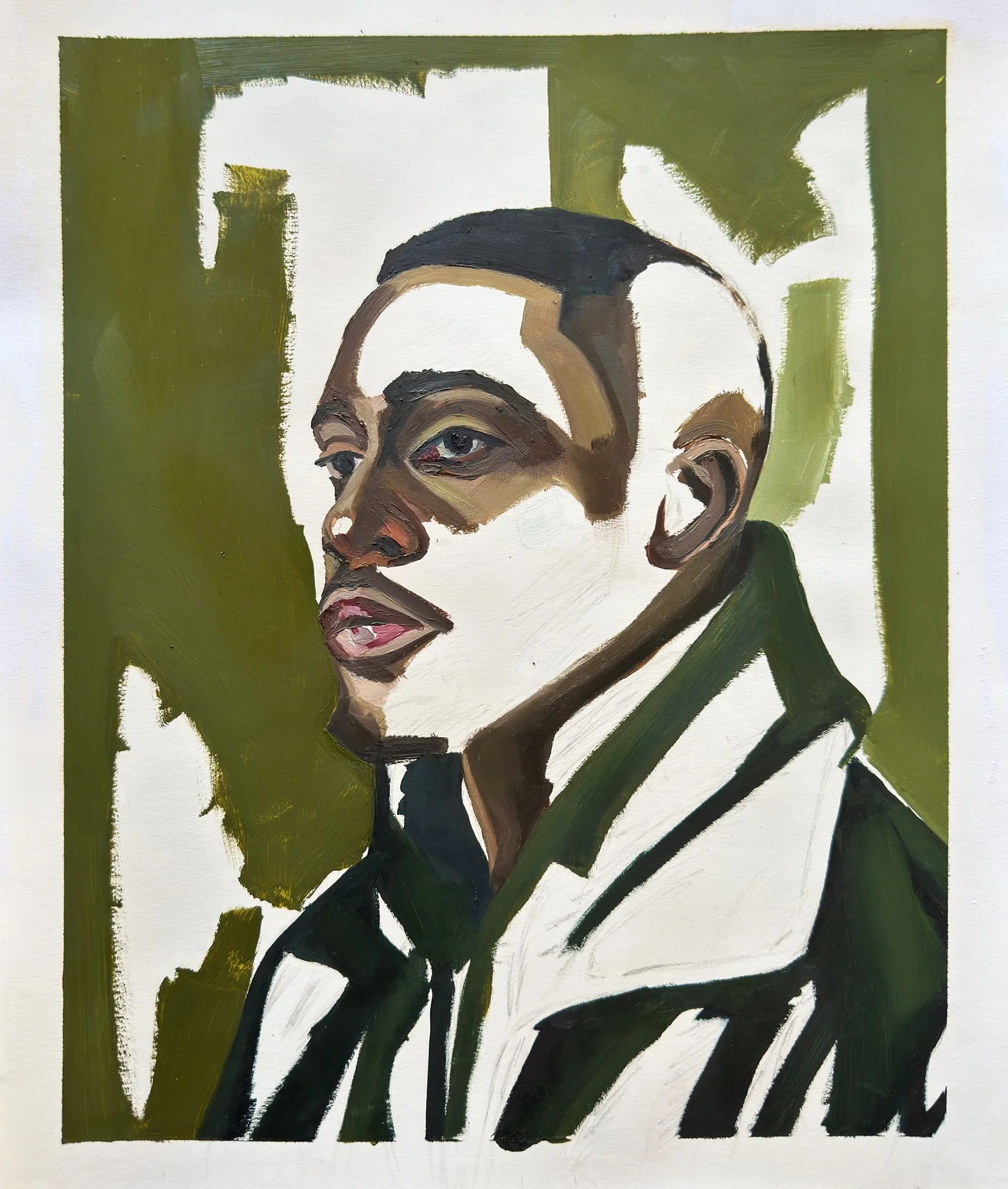
I like the mentions of what's not there throughout Dujie's piece. Things that are new and being taken away. Looking at the unfinished portraits I can connect to two in the same space, life being taken and never having the opportunity to see the full picture.
– Barry Johnson
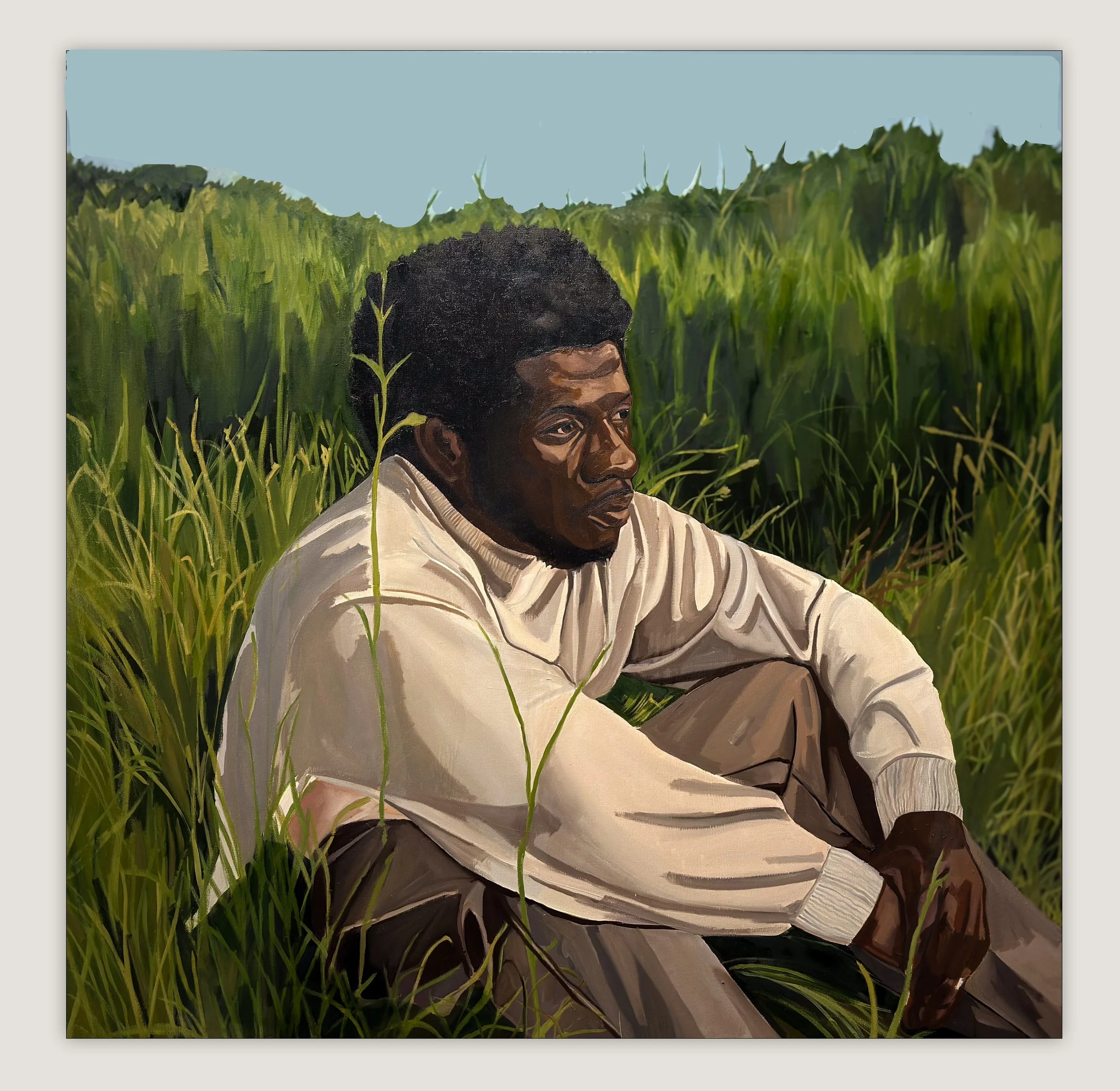
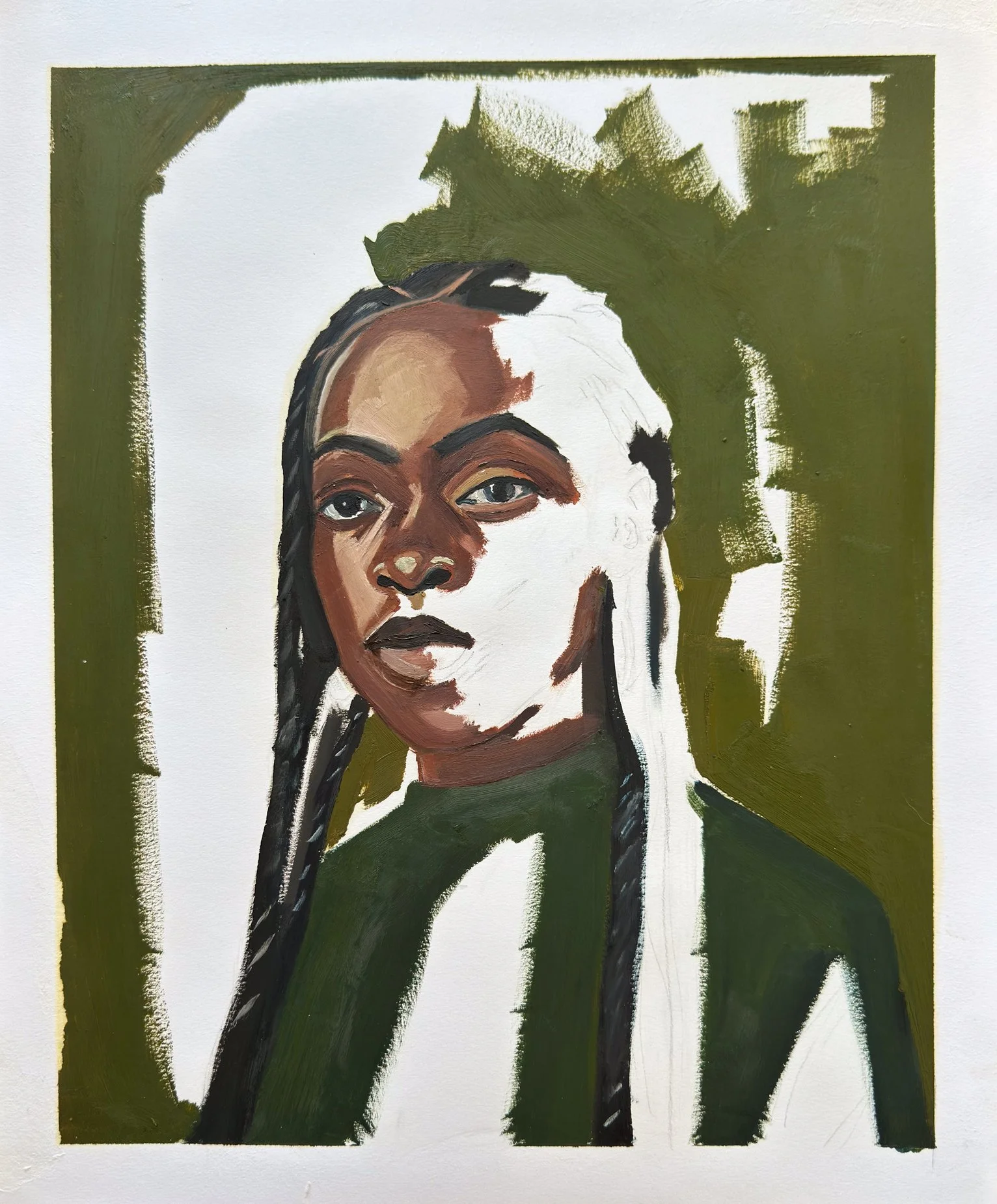
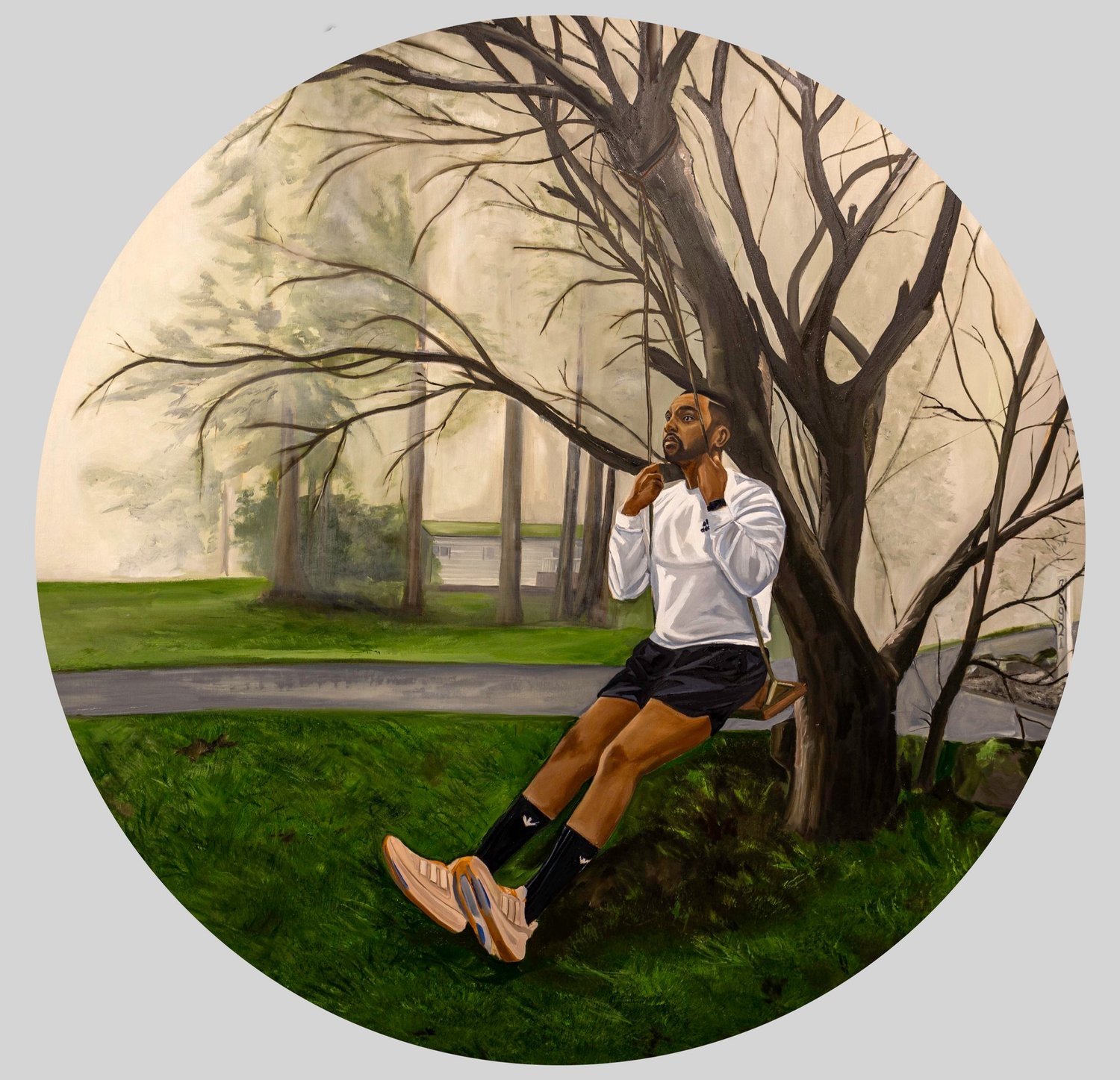
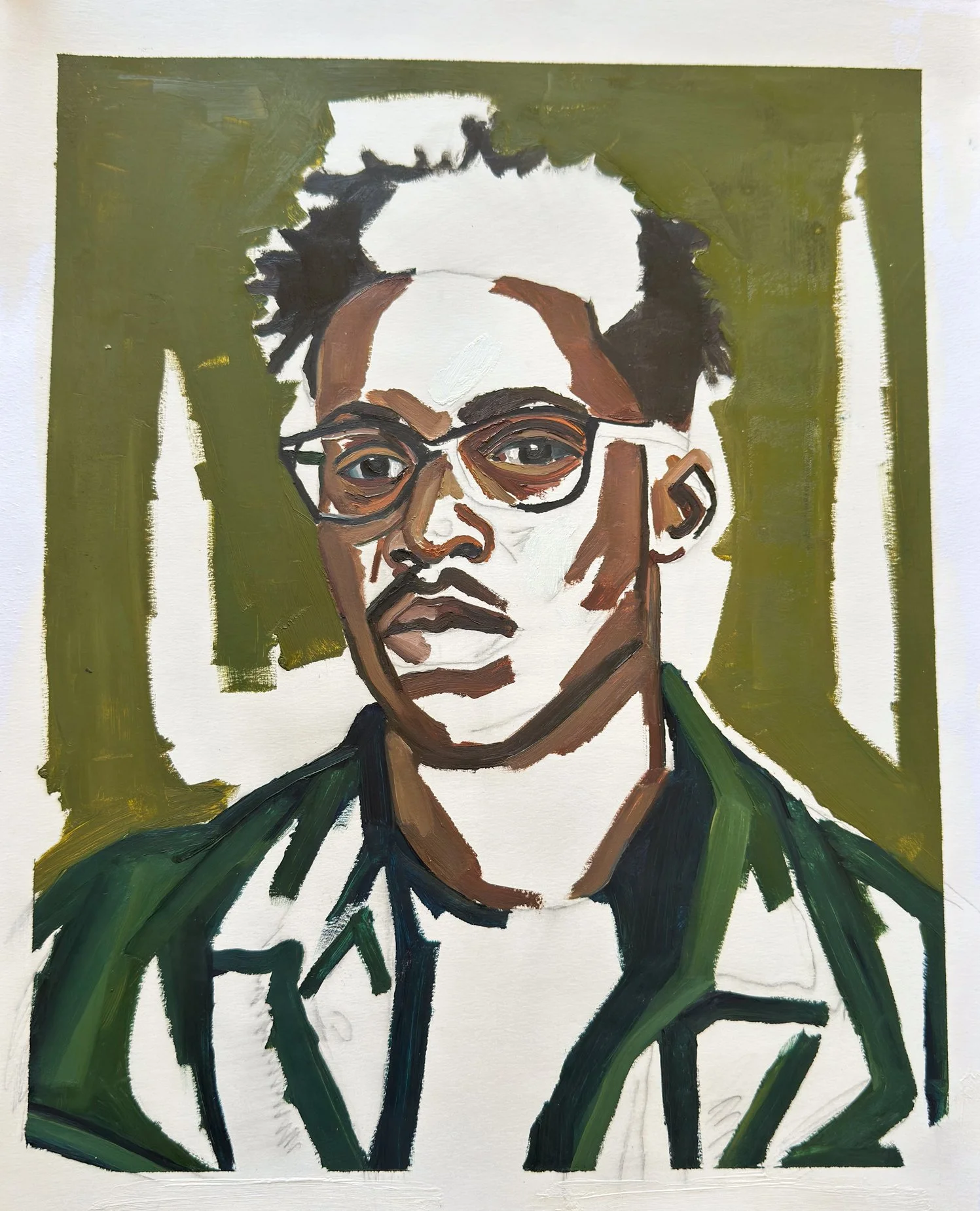
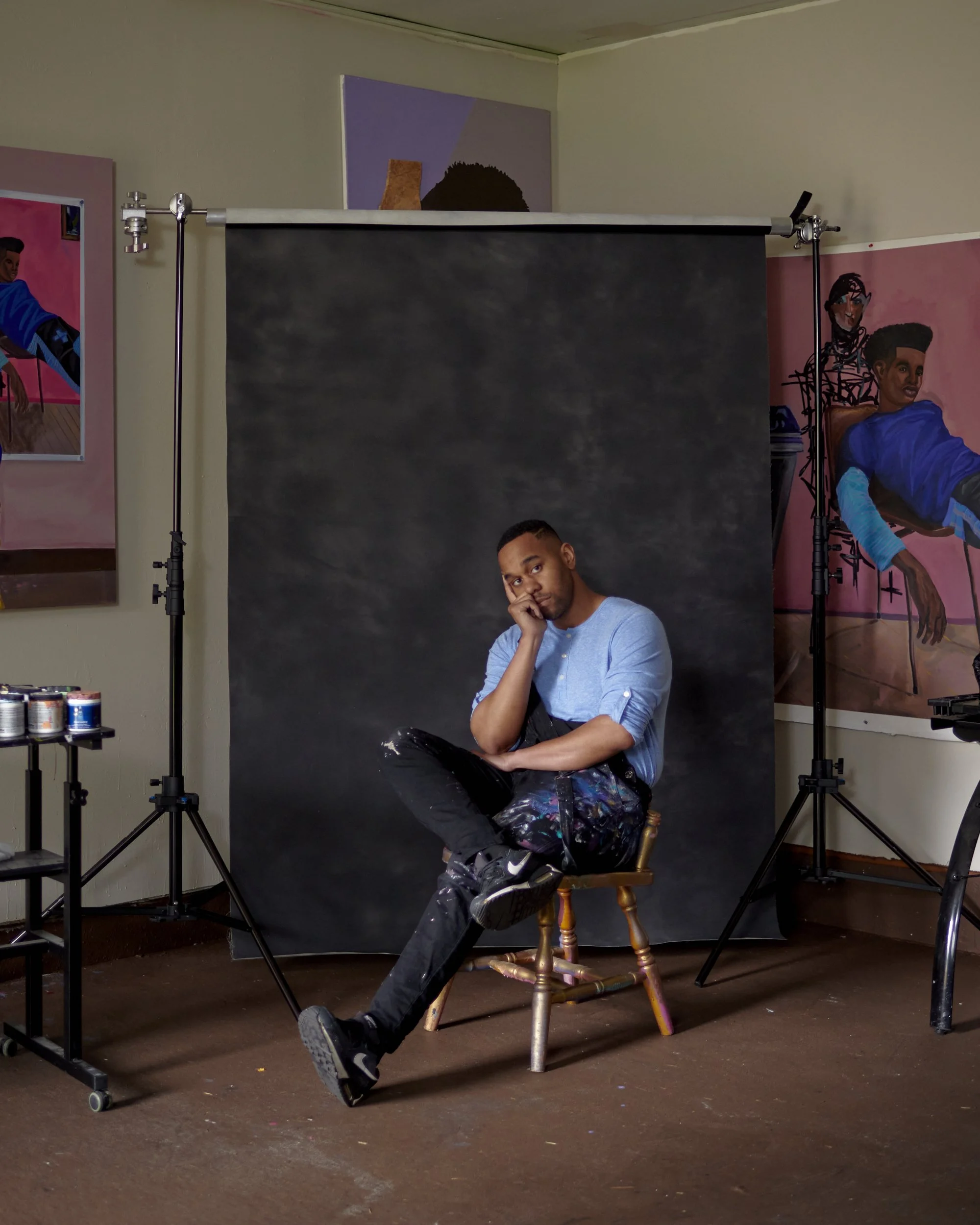
Barry Johnson is a Federal Way-based artist whose work is featured across Seattle, like his mural in the Central District’s Midtown Square. See more of Barry’s work on his website.
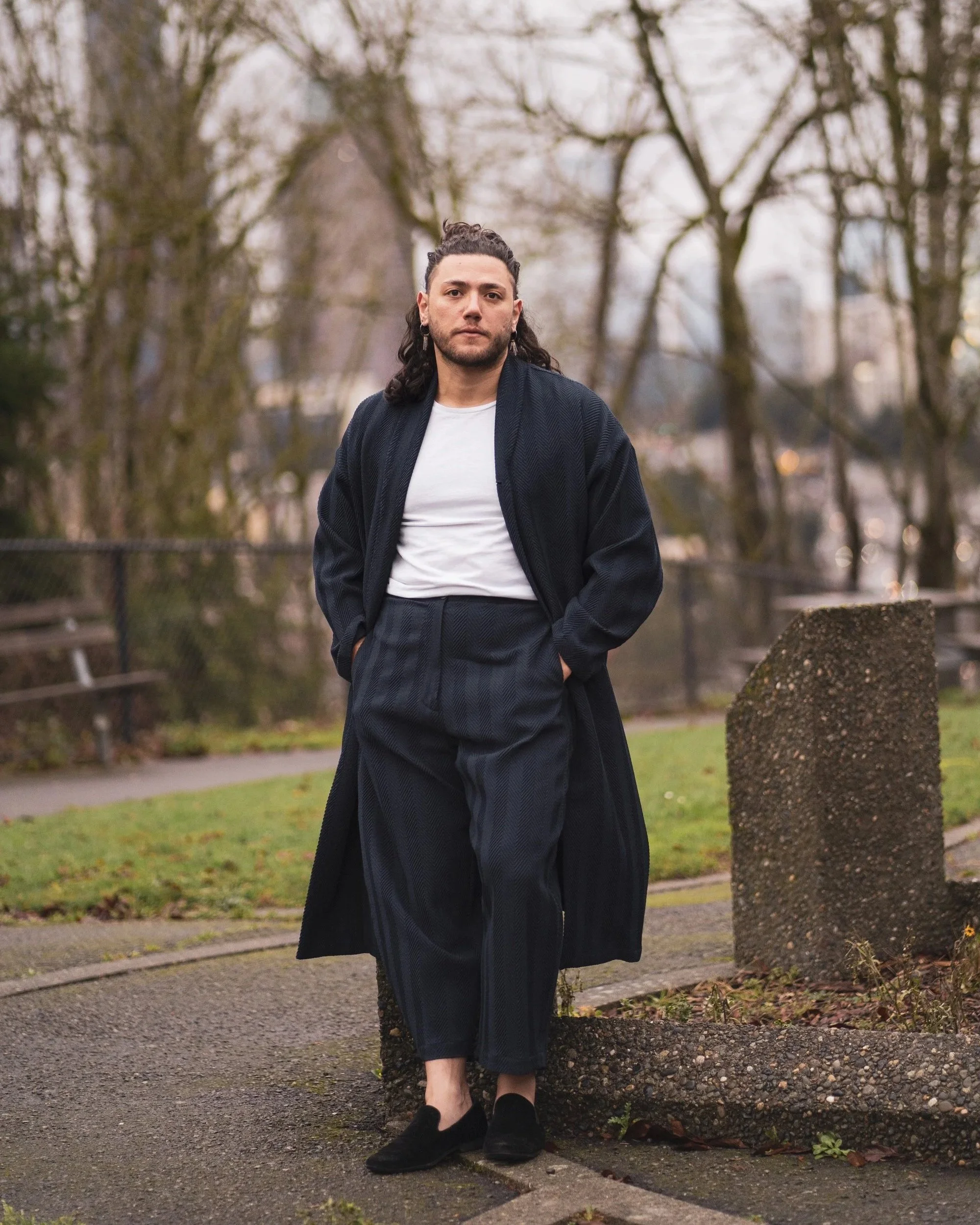
Dujie Tahat, a poet and critic based in Washington, is the current Civic Poet of Seattle. See more of Dujie’s work on their website.